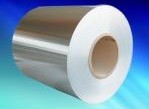
310S Stainless Steel Overview
Stainless steel 310S is an austenitic heat resistant alloy with excellent resistance to oxidation under mildly cyclic conditions through 2000 F degree. Its high chromium and nickel contents provide comparable corrosion resistance, superior resistance to oxidation and the retention of a larger fraction of room temperature strength than the common austenitic alloys like Type 304. Stainless 310 is often used at cryogenic temperatures, with excellent toughness to -450 F degree, and low magnetic permeability.
Fabrication with Stainless 310/310S
Type 310/310S is readily fabricated by standard commercial procedures. In comparison to carbon steel, stainless steels are tougher and tend to work harden rapidly
Chemical composition:
%
Cr 24.0-26.0
Ni 19.0-22.0
C 0.08 Max
Si 1.50 Max
Mn 2.00 Max
P 0.045 Max
S 0.03 Max
Mo 0.75 Max
Cu 0.50 Max
Fe Balance
Mechanical Properties:
Tensile Strength Psi 75000 , MPa 515
Yield Strength (0.2%Offset) Psi 30000 , MPa 205
Elongation 35 %
Characteristics of 310/310S Stainless
Oxidation resistance to 2000 F degree.
Moderate strength at high temperature
Resistance to hot corrosion
Strength and toughness at cryogenic temperatures
Applications for 310/310S Stainless
Kilns
Heat Exchangers
Radiant Tubes
Muffles, retorts, annealing covers
Tube hangers for petroleum refiing adn steam boilers
Coal gasifier internal components
Saggers
Furnace parts, conveyor belts, rollers, oven linings, fans
Food processing equipment
Cryogenic structures
Fabrication with Stainless 310/310S
Type 310/310S is readily fabricated by standard commercial procedures. In comparison to carbon steel, stainless steels are tougher and tend to work harden rapidly.